


Workforce Management Software for Manufacturing Teams: Improve Productivity and Efficiency

 Jul 22,2026
  By Namrata Indalkar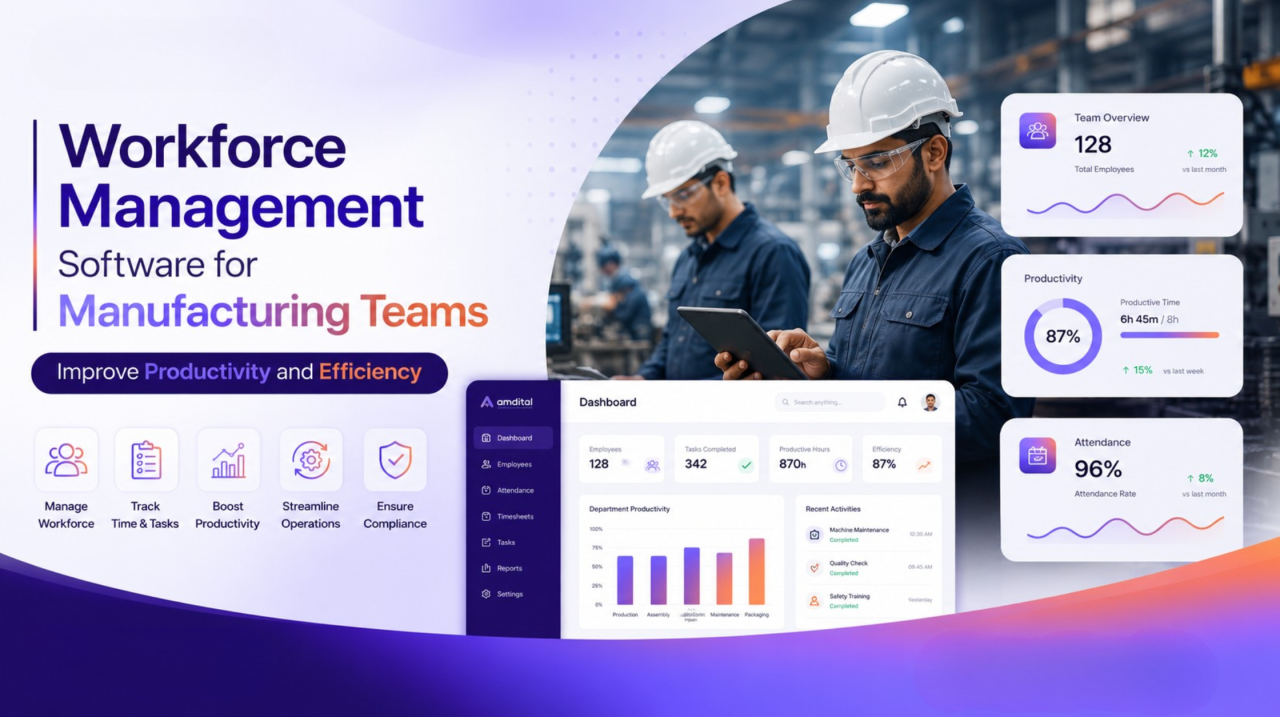
Manufacturing has never been more demanding. Rising customer expectations, tighter production schedules, labor shortages, and increasing operational costs mean manufacturers must find smarter ways to manage their workforce without compromising productivity or quality.
Many manufacturing businesses still rely on spreadsheets, manual attendance records, paper-based schedules, or disconnected systems to manage employees. While these methods may work for smaller operations, they quickly become inefficient as teams grow, shifts become more complex, and production demands increase.
This is where Workforce Management Software becomes an essential business tool.
A modern workforce management solution helps manufacturers plan schedules, monitor employee attendance, allocate resources efficiently, and gain real-time visibility into workforce performance. Instead of spending hours on administrative tasks, managers can focus on optimizing production while employees benefit from clear schedules and better communication.
In this guide, we’ll explore how Workforce Management Software works, why it’s important for manufacturers, and how it helps improve productivity, efficiency, and overall operational performance.
What Is Workforce Management Software?
Workforce Management Software is a digital solution that helps organizations plan, monitor, and optimize their workforce. It combines essential workforce processes such as employee scheduling, attendance tracking, shift planning, leave management, time tracking, and workforce analytics into one centralized platform.
For manufacturing companies, workforce management goes beyond simply tracking employee attendance. It ensures the right people are assigned to the right production lines, the correct number of employees are available for every shift, and managers have complete visibility into workforce availability and performance.
Instead of juggling multiple spreadsheets or paper records, managers can make informed decisions using accurate, real-time workforce data.
Why Manufacturing Teams Need Workforce Management Software
Manufacturing environments are fast-paced and highly dependent on workforce availability. Even a small scheduling error can disrupt production, delay customer deliveries, or increase overtime costs.
Many manufacturers face common challenges such as:
- Managing multiple production shifts
- Tracking attendance manually
- Last-minute employee absences
- Overtime planning
- Skill-based workforce allocation
- Compliance with labor regulations
- Limited visibility into workforce performance
Without the right systems in place, these challenges create unnecessary delays and administrative overhead.
Workforce Management Software helps manufacturers overcome these obstacles by centralizing workforce information and automating routine processes.
The result is greater efficiency, improved communication, and better operational control.
Key Challenges in Manufacturing Workforce Management
Effective Manufacturing Workforce Management requires balancing people, production schedules, and operational goals simultaneously.
Let’s look at some of the biggest workforce challenges manufacturers face.
1. Complex Shift Scheduling
Manufacturing facilities often operate around the clock.
Managing day shifts, night shifts, rotating schedules, weekend coverage, and overtime manually can become extremely time-consuming.
Even a minor scheduling conflict may lead to understaffed production lines or unnecessary labor costs.
2. Unplanned Absenteeism
Unexpected employee absences directly affect production targets.
Managers must quickly identify replacement workers while ensuring production continues without delays.
Without real-time workforce visibility, finding suitable replacements becomes difficult.
3. Manual Attendance Tracking
Many manufacturers still rely on punch cards, registers, or spreadsheets.
Manual attendance tracking increases administrative work and creates opportunities for human error.
Incorrect attendance records often lead to payroll discrepancies and employee dissatisfaction.
4. Limited Workforce Visibility
Managers need answers to questions such as:
- Who is currently working?
- Which employees are available?
- How much overtime has been assigned?
- Which departments need additional staff?
Without centralized workforce information, answering these questions requires manual effort.
5. Compliance and Labor Regulations
Manufacturers must comply with labor laws regarding working hours, overtime, breaks, and leave policies.
Manual processes increase the risk of non-compliance, which can result in penalties and legal complications.
How Workforce Management Software Improves Manufacturing Operations
Modern Workforce Management Software addresses these challenges through automation, real-time visibility, and intelligent workforce planning.
Instead of reacting to workforce issues after they occur, managers can proactively plan resources based on production requirements.
Here are some of the most valuable capabilities.
Smarter Workforce Scheduling
One of the biggest advantages of Workforce Scheduling is the ability to assign employees based on availability, skills, certifications, and production needs.
Instead of creating schedules manually every week, managers can:
- Build recurring shift templates.
- Assign employees automatically.
- Balance workloads across teams.
- Reduce scheduling conflicts.
- Minimize overtime costs.
Employees also receive clear schedules in advance, reducing confusion and improving accountability.
Real-Time Attendance Tracking
Digital attendance management provides instant visibility into workforce availability.
Managers can monitor:
- Clock-in and clock-out times
- Shift attendance
- Late arrivals
- Early departures
- Overtime hours
- Leave balances
This real-time information improves payroll accuracy while helping supervisors respond quickly to workforce shortages.
Better Resource Allocation
Every production line has different workforce requirements.
Some tasks require specialized skills, while others need additional manpower during peak production periods.
With accurate workforce data, managers can allocate employees where they’re needed most, improving productivity without increasing labor costs.
Improve Manufacturing Team Productivity with Smarter Workforce Management
One of the primary goals of every manufacturer is to maximize output while maintaining product quality and controlling labor costs. Achieving this balance isn’t easy, especially when production schedules, workforce availability, and customer demand are constantly changing.
This is where Workforce Management Software plays a critical role. By providing real-time visibility into employee availability, shift coverage, and performance, manufacturers can make faster decisions and eliminate many of the delays caused by manual workforce planning.
Better workforce planning directly contributes to stronger Manufacturing Team Productivity, helping employees spend more time on value-adding tasks instead of dealing with scheduling confusion or administrative issues.
For example, supervisors can quickly identify understaffed production lines, redistribute workloads, or assign qualified employees based on skills and availability. This flexibility minimizes downtime while ensuring production targets remain on track.
The Benefits of Workforce Scheduling in Manufacturing
Effective Workforce Scheduling is about more than creating employee rosters. It ensures the right employees are working at the right time, in the right place, with the right skills.
When scheduling is handled manually, even small mistakes can create major disruptions. Missed shifts, overlapping schedules, or insufficient staffing often lead to production delays and increased overtime expenses.
Modern workforce scheduling software simplifies this process by automating schedule creation and giving managers complete visibility into workforce availability.
Some of the biggest benefits include:
Balanced Shift Planning
Managers can distribute workloads fairly across shifts, reducing employee fatigue while maintaining production efficiency.
Reduced Overtime Costs
By identifying staffing gaps early, businesses can minimize unnecessary overtime and optimize labor expenses.
Improved Employee Satisfaction
Employees receive clear schedules, timely updates, and better visibility into their working hours, helping them plan their personal commitments more effectively.
Faster Response to Workforce Changes
Unexpected absences are inevitable in manufacturing. Workforce scheduling tools allow managers to quickly identify available replacements without disrupting production.
These capabilities help manufacturers maintain operational continuity while improving employee engagement.
Automating Routine Workforce Processes
Administrative tasks consume valuable time for supervisors and HR teams.
Approving leave requests, updating attendance records, calculating overtime, and preparing shift schedules manually often leave little time for strategic planning.
Workforce Management Software automates these repetitive activities, allowing managers to focus on improving production efficiency rather than paperwork.
Common automated workflows include:
- Employee attendance tracking
- Shift scheduling
- Leave approvals
- Overtime calculations
- Workforce notifications
- Timesheet generation
- Payroll-ready reports
Automation also reduces the likelihood of manual errors, ensuring workforce data remains accurate and reliable.
AI Is Transforming Workforce Management
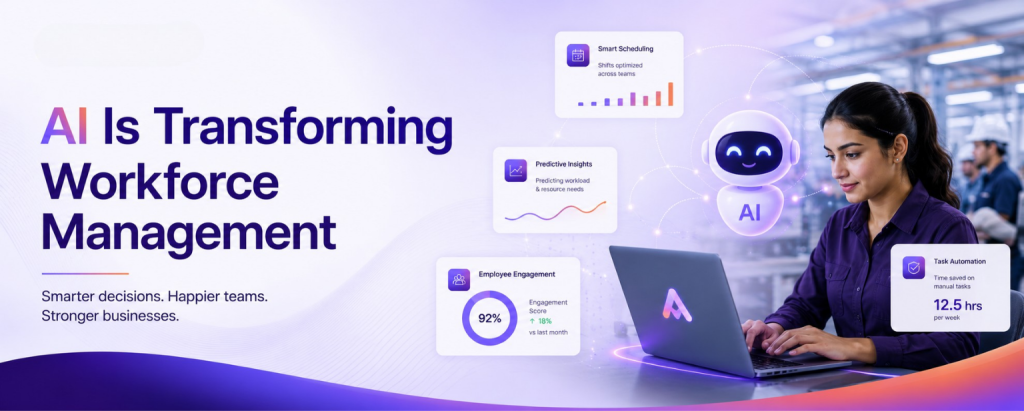
Artificial intelligence is becoming an increasingly valuable part of modern workforce planning.
Instead of relying solely on historical reports, AI-powered workforce management solutions analyze operational data and provide actionable recommendations.
For manufacturing businesses, AI can help:
- Predict staffing requirements based on production demand.
- Identify departments with excessive overtime.
- Detect scheduling conflicts before they occur.
- Highlight workforce performance trends.
- Recommend better resource allocation.
These insights help managers make proactive decisions rather than reacting to problems after production has already been affected.
As AI capabilities continue to evolve, manufacturers will gain even greater visibility into workforce performance and operational efficiency.
Key Features to Look for in Workforce Management Software
Not every workforce management solution offers the same capabilities. Before investing in a platform, manufacturers should evaluate whether it supports both current operational needs and future growth.
Here are some of the most important features to consider.
Smart Workforce Scheduling
Look for software that allows managers to create recurring shifts, assign employees based on skills and availability, and adjust schedules quickly when production requirements change.
A flexible Workforce Scheduling system reduces planning time while improving workforce utilization.
Attendance and Time Tracking
Accurate attendance data is essential for payroll, compliance, and workforce planning.
The software should provide:
- Digital clock-in and clock-out
- Biometric or mobile attendance
- Overtime tracking
- Shift history
- Leave management
This ensures managers always have access to accurate workforce information.
Workforce Analytics
Data-driven decision-making is becoming increasingly important in manufacturing.
A good workforce management solution should include dashboards that track:
- Employee attendance
- Overtime trends
- Labor utilization
- Productivity metrics
- Shift performance
These insights help improve Manufacturing Team Productivity while supporting better workforce planning.
Mobile Accessibility
Manufacturing managers are rarely sitting behind a desk.
Mobile access enables supervisors and employees to:
- View schedules
- Approve leave requests
- Receive shift notifications
- Track attendance
- Access workforce information from anywhere
This improves communication while reducing delays.
Compliance Management
Labor regulations continue to evolve.
Workforce management software should help organizations comply with:
- Working hour regulations
- Overtime policies
- Leave entitlements
- Attendance records
- Audit requirements
Automated compliance reduces administrative risk and improves reporting accuracy.
Best Practices for Successful Manufacturing Workforce Management
Technology alone doesn’t solve workforce challenges. Success also depends on adopting effective workforce management practices.
Manufacturers should consider the following best practices:
- Regularly review workforce schedules to match production demand.
- Cross-train employees to improve operational flexibility.
- Monitor attendance trends to identify recurring issues.
- Use workforce analytics to optimize staffing levels.
- Encourage employee feedback to improve scheduling processes.
- Automate repetitive administrative tasks wherever possible.
- Continuously evaluate workforce performance using real-time dashboards.
Combining these practices with modern Workforce Management Software creates a more agile and productive manufacturing environment.
Signs Your Manufacturing Business Needs Workforce Management Software
Many manufacturers continue using manual processes because “they’ve always worked.” However, as operations grow, these systems often become bottlenecks rather than enablers of productivity.
If your manufacturing business is experiencing any of the following challenges, it may be time to invest in Workforce Management Software.
1. Scheduling Takes Too Much Time
If supervisors spend hours every week creating or updating employee schedules, manual planning is reducing productivity. Modern Workforce Scheduling tools automate this process, saving time while minimizing scheduling conflicts.
2. Overtime Costs Keep Increasing
Unplanned overtime often results from poor workforce visibility. Without accurate scheduling and attendance data, managers struggle to optimize labor costs.
Workforce management software helps identify staffing gaps early, allowing businesses to distribute workloads more effectively.
3. Attendance Errors Affect Payroll
Manual attendance tracking often leads to inaccurate payroll calculations, employee disputes, and unnecessary administrative work.
Automated attendance tracking improves accuracy while reducing payroll processing time.
4. Production Delays Due to Staffing Issues
Missing employees or poorly planned shifts can slow production and impact customer deliveries.
With real-time workforce visibility, managers can quickly identify available employees and maintain production continuity.
5. Limited Visibility Into Workforce Performance
If managers cannot answer questions like:
- Which shifts are performing best?
- Where is overtime increasing?
- Which departments are understaffed?
- How productive is each team?
then decision-making becomes reactive instead of proactive.
Modern Workforce Management Software provides dashboards and reports that support faster, data-driven workforce planning.
Future Trends in Manufacturing Workforce Management
Manufacturing continues to evolve with digital transformation, automation, and Industry 4.0 technologies. Workforce management is evolving alongside these changes, helping businesses become more agile and competitive.
Here are some trends shaping the future of Manufacturing Workforce Management.
AI-Powered Workforce Planning
Artificial intelligence is making workforce planning more intelligent by analyzing production schedules, historical workforce data, and labor demand to recommend optimal staffing levels.
Managers can make better decisions while reducing unnecessary overtime and labor shortages.
Mobile Workforce Management
Employees increasingly expect access to schedules, attendance records, leave requests, and shift updates directly from their mobile devices.
Mobile-first workforce management improves communication while reducing administrative delays.
Predictive Analytics
Rather than reviewing historical reports, manufacturers are using predictive analytics to forecast workforce requirements, identify potential staffing shortages, and improve production planning.
This proactive approach helps businesses prepare for demand fluctuations before they affect operations.
Greater Employee Self-Service
Modern workforce platforms empower employees to:
- View schedules
- Request leave
- Swap shifts (with approval)
- Track attendance
- Update personal information
Self-service reduces HR workloads while improving the overall employee experience.
Integration with Smart Manufacturing
As manufacturers adopt connected machines and IoT technologies, workforce management systems are becoming more integrated with production operations.
This allows organizations to align workforce planning with machine utilization, production schedules, and operational performance, creating a more efficient manufacturing environment.
Conclusion
People are the driving force behind every successful manufacturing business. While machines, automation, and technology continue to transform production, managing the workforce efficiently remains one of the most important factors in achieving operational excellence.
Workforce Management Software provides manufacturers with the tools they need to simplify scheduling, improve attendance tracking, optimize labor utilization, and increase overall productivity. Instead of relying on manual processes, businesses gain real-time visibility into workforce performance, enabling faster decisions and better resource planning.
As manufacturing operations become more complex, investing in effective Manufacturing Workforce Management is no longer just about improving efficiency it’s about building a resilient, scalable operation that can adapt to changing business demands.
The right workforce management solution doesn’t simply organize employee schedules. It empowers manufacturing teams to collaborate better, reduce administrative effort, and focus on what matters most, delivering quality products on time.
Frequently Aksked Question


 Jul 20, 2026

